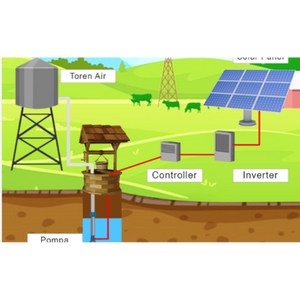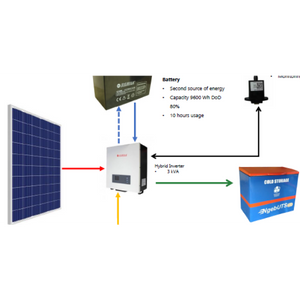
For years, many remote and semi-urban communities had to rely on diesel generators and unstable grid extensions. Today, the equation is changing. Local governments, cooperatives, and mission-driven technology firms are deploying decentralized microgrids that combine solar photovoltaics, battery energy storage, and digital monitoring systems.
Unlike traditional centralized infrastructure, microgrids are built closer to demand centers. That means lower transmission losses, better outage resilience, and faster deployment cycles. In practical terms, households experience fewer blackouts, small businesses reduce fuel expenditures, and local clinics gain more predictable electricity for critical equipment.
"Microgrids are no longer backup systems. In many regions, they are becoming the primary architecture for reliable and affordable energy access."
What Is Driving the Rapid Adoption?
Several factors are converging. Solar module and battery prices continue to trend downward, while digital control systems have become easier to deploy and operate. At the same time, frequent climate-related disruptions are pushing local operators to seek resilient alternatives that can function independently from fragile central grids.
Key Takeaways
- Hybrid solar + battery systems significantly reduce diesel dependence.
- Localized generation improves continuity during central grid outages.
- IoT-based monitoring helps operators manage load and battery health in real time.
- Community-managed models strengthen long-term maintenance ownership.
Socioeconomic Impact on Communities
The shift to decentralized energy is creating measurable outcomes beyond electricity access. Fisheries can preserve catch quality with stable cooling, schools can operate digital learning tools consistently, and small enterprises can extend productive hours without fuel price volatility.
In regions where grid expansion is slow or cost-prohibitive, decentralized microgrids are also reducing the timeline for development programs. Instead of waiting years for large-scale infrastructure upgrades, communities can deploy scalable systems in phased modules.
What Comes Next
Looking ahead, the next wave of deployments is expected to include stronger forecasting algorithms, smarter demand-response automation, and tighter integration with electric mobility and efficient DC appliances. As policy frameworks mature, decentralized energy is likely to become a permanent pillar of regional power strategy.