Water infrastructure operators face a recurring challenge: failures are often detected too late. By the time a pump stops, the impact already affects communities, farming operations, and emergency response systems. Predictive monitoring changes this dynamic by moving operations from reactive maintenance to preventive decision-making.
The approach combines sensor telemetry, threshold alerts, and trend analysis. Instead of waiting for catastrophic failure, systems track pressure irregularities, vibration behavior, thermal anomalies, and power quality shifts in real time. Teams can then schedule targeted interventions before performance collapses.
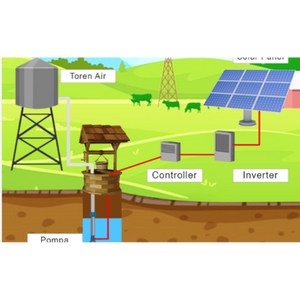
For decentralized solar-powered pumping systems, predictive monitoring is especially important. Energy availability varies across weather patterns, so smart logic is used to align pumping schedules with generation windows and battery conditions. This creates better water delivery reliability without overloading equipment.
Institutions implementing predictive monitoring typically report three measurable outcomes: lower unplanned downtime, faster fault localization, and longer asset life. These gains translate into lower operating costs and stronger service continuity for communities that rely on stable water access.
As IoT modules become more affordable and cloud dashboards more accessible, predictive monitoring is expected to become a standard component of modern water infrastructure programs.